




 Free, Fast Shipping
 14-Day Free Trial
 2-Year Warranty


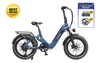
Heybike Ranger 3.0 Pro Ebike
The Best Comfort Folding Fat Tire Ebike
- Sapphire Blue
- Emerald Green
- Ruby Red
$1,499.00
Regular price
$1,999.00
Full Suspension
Comfort
90 Miles
Max Range
Torque Sensor
Smooth Ride
NFC
Tap & Go


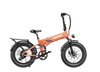
Heybike Mars 3.0 Ebike
Beyond powerful - Full Suspension Comfort
- Vivid Orange
- Stormy Blue
- Nightrider Black

$1,199.00
Regular price
$1,799.00
All-Terrain
Full Suspension
95 Nm
Torque Beast
440 lbs
Max Load
NFC
Tap & Go


$1,499.00
Regular price
$1,999.00
45 lbs
Lightweight
85 Miles
Max Range
Sensor Switch
Torque and cadence
27.5 x 2.2"
Kenda Tire


$1,699.00
100 Miles
Max Range
440 lbs
Max Load
Sensor Switch
Torque and cadence
Premium Tektro
Hydraulic Brakes


$1,399.00
Regular price
$1,499.00
1500W
Peak Power
40/80 Miles
Max Range
300 lbs
Max Load
Dual Battery
Available
Free, Fast Shipping
14-Day Free Trial
2-Year Warranty
Long Range Ebikes FAQs
What Is a Long-Range Ebike?
A long-range ebike is built to cover more distance between charges than a typical electric bike. There is no fixed mileage that officially defines “long range,” but models offering 60 miles or more of claimed range are commonly positioned in this category. The more useful benchmark is whether the bike can comfortably cover your regular trips without needing to recharge.
What Counts as Long Range for an Ebike?
There is no official mileage threshold for a long-range ebike. In today's market, 60+ miles is a useful starting point, while models rated around 80–100 miles are generally positioned toward the higher end of the category. What counts as “long range” ultimately depends on the distance you need to cover and how much battery reserve you want after each ride.
What Determines Ebike Range?
Battery capacity is one of the biggest factors, but it is not the only one. Speed, pedal-assist level, rider and cargo weight, hills, wind, tire pressure and road surface all affect how quickly an ebike uses its available energy. A larger battery gives you more range potential, while the way you ride determines how much of that energy you use.
How Do I Get More Range From My Ebike?
Use a lower pedal-assist level when you can, maintain a steady speed and keep your tires properly inflated. Avoid unnecessary throttle use and extra weight, especially on longer rides. Planning your route around flatter roads can also make a noticeable difference when you're trying to get the most distance from a single charge.
Why Doesn't My Ebike Reach Its Advertised Range?
The advertised range is usually the maximum distance measured under specific conditions, rather than a guarantee for every rider. Higher assist levels, faster speeds, hills, wind, heavier loads and frequent throttle use can all reduce range. For everyday planning, treat the published figure as an upper benchmark and choose a bike with enough battery capacity to give you some extra room.
How Much Range Do I Actually Need?
Start with your longest regular ride, not the highest range number you can find. For example, if your daily round trip is 20 miles, a bike rated for 60 miles gives you a substantial buffer for hills, weather and changes in your route. If you regularly ride 40–50 miles at a time, moving into the 80–100-mile range can make more sense.
What Battery Size Is Good for a Long-Range Ebike?
Look at battery capacity in watt-hours (Wh) when comparing long-range ebikes. A larger Wh rating means the battery stores more energy, although it does not guarantee a specific number of miles. Current long-range models commonly use batteries around 700–1,000Wh or more, while dual-battery systems can provide substantially more capacity for riders who prioritize maximum range.
Are Long-Range Ebikes Heavier?
Long-range ebikes can weigh more because larger batteries provide more energy for extended rides. The overall weight also depends on the motor, frame, tires and suspension. For riders who regularly travel longer distances, the additional battery capacity can be a worthwhile trade-off for more range and fewer charging stops.